Learn / Gut & Fiber
Gut & FiberWhat konjac actually is
 Jonathan Carp, MD·July 2026·~3 min read
Not a noodle pretending to be pasta. A root vegetable with a 3,000-year history and a fiber your gut has been waiting for.
It starts with a plant
Konjac is a real plant, not a factory invention, because it grows as a root vegetable in the mountains of Japan and Southeast Asia, the way a potato or a yam grows in the ground. When you understand that it comes from soil rather than a lab, the whole thing gets a lot easier to trust.
The part we use is the corm, which is the swollen underground stem that stores the plant's energy. That storage is where the interesting stuff lives, because the plant packs it with a soluble fiber called glucomannan, and that single fiber is the reason konjac behaves the way it does on your plate and in your gut.
Three thousand years of dinner
This is not a new idea, because people in Japan have been eating konjac for roughly three thousand years, where the noodles are called shirataki and the firm blocks are called konnyaku. When a food has been on the table that long, it has already answered the only question that matters, which is whether people actually enjoy eating it.
I first ran into it myself in 2006 at a Buddhist-run vegetarian restaurant outside Kyoto, because a bowl of these translucent noodles arrived and I was amazed that something so satisfying could carry almost no calories. I brought the idea home for my patients, and that is really how Miracle Noodle began.
Why it has almost no calories
Konjac noodles land at 0 to 10 calories a serving because they are made mostly of fiber and water, not flour. That distinction is the whole point, because regular pasta is ground-up starch that your body breaks down into sugar, while glucomannan is a fiber your body largely does not digest for energy at all.
So the number on the label stays low for an honest reason, not a trick. When a food is fiber rather than flour, most of it passes through and feeds the natural bacteria in your gut instead of turning into blood sugar, which is why konjac can be a bowl of noodles and still leave your energy steady rather than sending it up and down.
A little honesty about texture
I will always tell you the truth about how a food behaves, and konjac has its own character, because it is a fiber gel rather than a wheat dough, so it arrives with a springy bite and a bit of its own aroma from the packing liquid. That is normal, and it is easy to handle.
Rinse the noodles well under running water, because that clears the natural liquid they are packed in. Then give them a quick heat in a dry, hot pan for a couple of minutes, because moving the extra water off concentrates the texture and lets them drink up whatever sauce you add. Do that once and the springiness turns into something you look forward to.
Who it's really for
Konjac tends to suit people who want a warm, filling bowl without the heavy carb load, because you get the ritual of noodles while most of the plate is soluble prebiotic fiber feeding your gut. It is plant-based, gluten-free, and grain-free, which makes it a simple swap when wheat pasta is off the table.
None of this is about deprivation. It is about eating something with a long, quiet history that happens to be gentle on your blood sugar and kind to your gut, and that is the reason why it has stayed on the table for three thousand years.
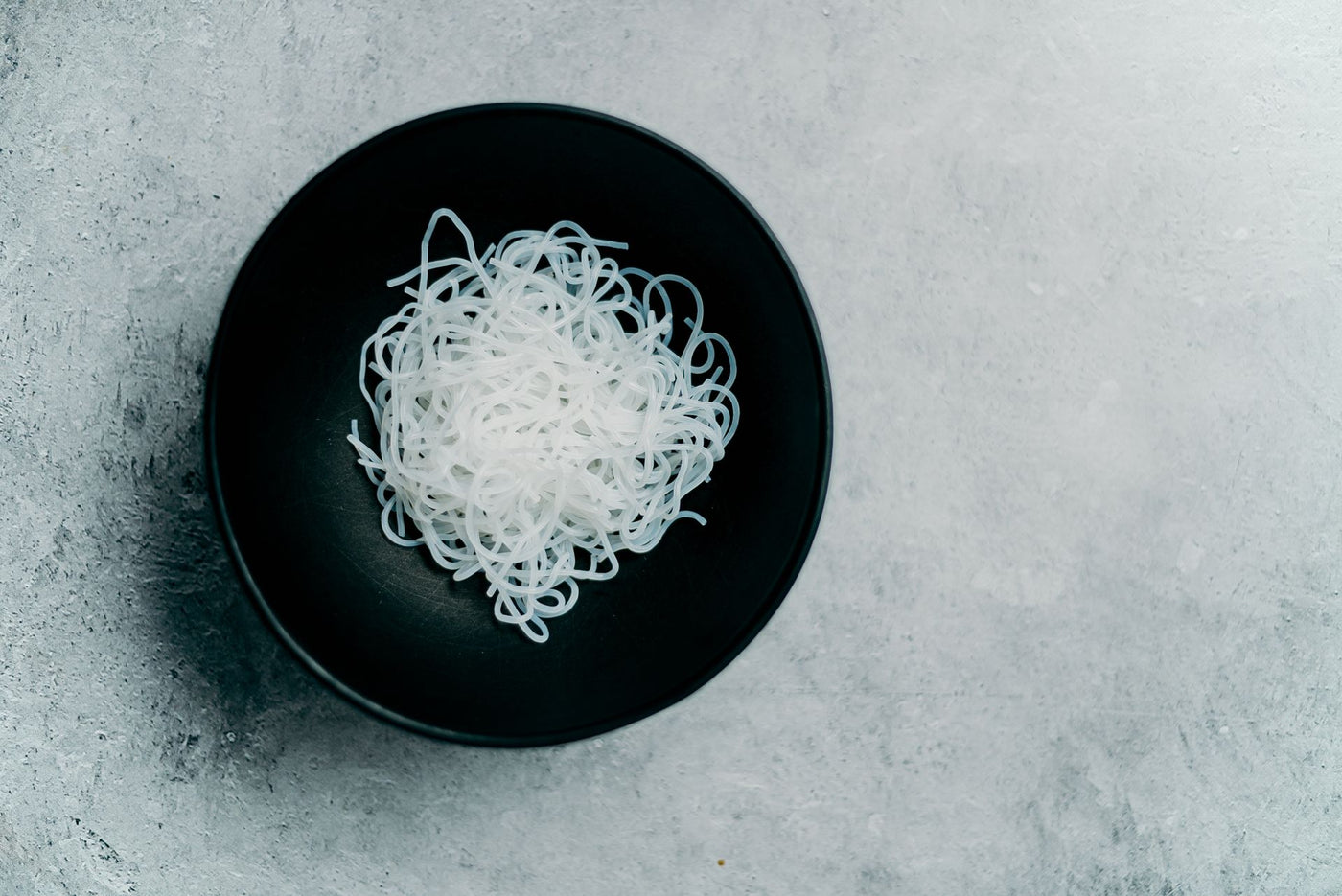
Ready-to-Eat Angel Hair
The delicate strand that shows off konjac at its best — rinse, quick-heat, and it drinks up any sauce you love.

Jonathan Carp, MD
A board-certified physician who started Miracle Noodle in 2006 for his own patients. He doesn’t want to sell you something — he wants to help you become your own authority in your health.