
Learn / Daily rhythm
Daily rhythmThe perfect metabolic day: a daily routine for metabolic health
 Jonathan Carp, MD·October 2026·~10 min read
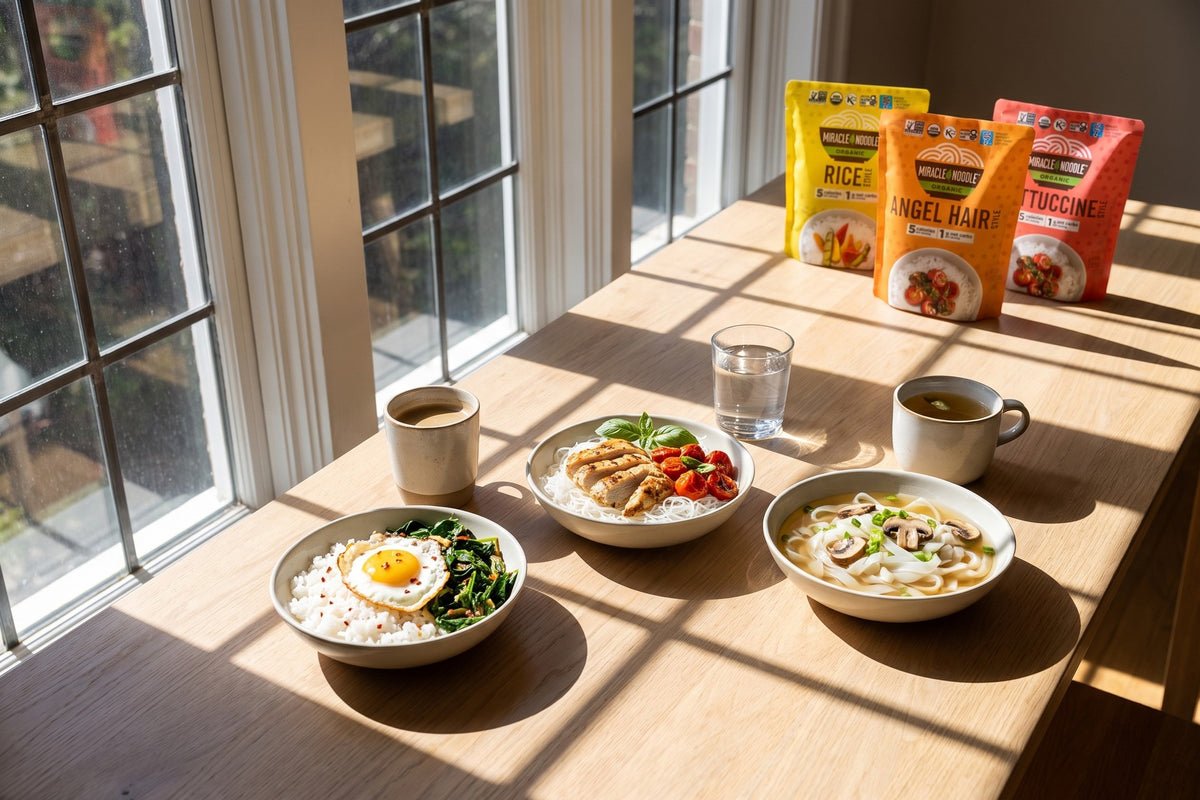
The same meal, the same walk, and the same screen land differently at different hours. Here's the biology behind each part of the day.
A daily routine for metabolic health works best when it follows the clock your body already runs on, because every system you have, from your skin to your liver to your pancreas, keeps time, and the rules change from morning to night. The picture I use is the same road with different speed limits. The road hasn't changed, and the car hasn't changed, but what's fine at noon isn't what's fine at 9 p.m. In a recent class, I walked through one day, hour by hour, to show why. This is for anyone who wants steadier energy and appetite and would rather understand their body than follow someone else's rules.
A daily routine for metabolic health is a framework, not a system
This isn't a perfect day I expect you to live. Nobody does all of it every day, including me. A system tells you to do this, do this, do this. A framework gives you enough understanding of the biology to make your own call.
My teacher used to say every moment offers a life-giving decision or a life-denying one. Once you understand why your body behaves differently at different hours, you can't unsee it, and you start making the better choice more often.
Morning, 6 to 10 a.m.: setting the hormonal tone
The morning sets the hormonal tone for the day, because that's when your master clock gets its start signal. The clock sits in your brain and is set by light coming through your eyes. Once set, it governs your cortisol rhythm, your GLP-1 rhythm, and the sleep pressure that builds all day until you're ready for bed.
So get outside within about 30 minutes of waking, without sunglasses or a window in between. You don't need to look at the sun, just be outside.
Then wait on the coffee. Cortisol gets a bad name as the stress hormone, but it's supposed to peak naturally just before you wake, releasing some blood sugar and priming your muscles for the day. Caffeine raises cortisol too, and the body adapts fast. In a controlled trial, people who took caffeine daily for five days no longer showed a cortisol bump from their morning dose, though a later dose still produced one (Lovallo et al., 2005). My concern is that the body starts leaning on the cup instead of its own rhythm. I suggest waiting about 90 minutes. That's my practical rule rather than a proven threshold, but by then your natural peak has done its job.
Move before your first meal. Ten to fifteen minutes is plenty: a short walk or a set of deep knee bends. I think of muscle as a glucose disposal site, the back door I describe in why muscle is your most underrated metabolic organ. I'll be honest that the case for moving before a meal is mostly my own reasoning. The studies I trust most are about moving after one. I still like it as one more signal that the day has started.
Eat protein and vegetables first. Protein rings the GLP-1 doorbell louder than any other food. That sets up fullness, gives your muscles raw material, and sets the tone for every meal that follows.
Midday, 10 a.m. to 2 p.m.: when your body handles food best
Midday is your best window for food, because your body handles a meal most comfortably in the first half of the day. Human studies find daily rhythms in glucose, insulin, glucose tolerance, and appetite, and several peak in the biological morning or around noon (Poggiogalle et al., 2018). If there's a time for your carbohydrates, this is it, though I'd still build lunch around protein and vegetables.
Get outside again, even briefly. Every reminder that it's daytime helps your body recognize night later. Midday is also a good spot for your one fermented food: yogurt, kefir, sauerkraut, or kimchi. You don't need it all day, just every day.
Then walk after you eat. A 10- to 20-minute walk after a meal is like opening extra lanes on the motorway, because working muscles pull sugar out of the blood to use it. In a small trial of healthy young adults, a 10-minute walk at a comfortable pace right after a glucose drink produced a lower glucose peak than sitting (Hashimoto et al., 2025). It was twelve people and a drink rather than a meal, so take it as a clue. But it matches what I teach: it doesn't take intensity, just movement. When you're sedentary, your body basically starts to wonder whether you still need to be here. Every contraction tells it you intend to stick around.
Afternoon, 2 to 6 p.m.: the performance window and the snack decision
The afternoon is a natural window for strength work, because your core body temperature peaks then. You arrive already warmed up, and your back tends to be less stiff than first thing. If mornings are the only time you can train, train in the morning. There's just a biological sweet spot later.
On rest days, a walk or some knee bends keeps your muscles sending their hormone-like messages to your brain, bones, and gut. When I practiced in the San Fernando Valley, so many patients knew Jack LaLanne that he came up constantly. He said something to the effect that the body is the only machine that wears out when you don't use it.
The afternoon snack decision can undo a good day. Mood and energy ride on blood sugar and cortisol more than most people realize, and a lot of people blame their willpower for what's really biological messaging. I've written about that slump in the 3 p.m. crash.
The pastry by the coffee station gives you a quick burst of dopamine. But even when blood sugar is already within the normal range, a fast rise is often followed by a dip, and the dip brings a false sort of hunger that sets up the next poor choice. So be prepared. My favorite is one handful of nuts a day. Greek yogurt and eggs work. Some afternoons I open a bag of egg white noodles, drain a little water, pour in some marinara, and eat them right out of the bag.
Evening, 6 to 9 p.m.: same road, lower speed limit
Dinner deserves different rules, because your body's ability to handle carbohydrates drops as the day goes on. As the sun sets, its light shifts toward red and infrared, telling your master clock that night is coming. The same meal lands harder at 8 p.m. than at noon.
So lean dinner toward protein, vegetables, and good fats, skip refined carbohydrates, and eat earlier. Close your eating window at least two to three hours before bed, and four or five is better. Eating puts you in growth mode. Sleep is rest and recharge mode, and food keeps you from making the switch.
With fewer carbohydrates at night, umami is the overlooked tool. I think of three kinds of satiety: protein, the signal that you've eaten something of substance; volume, from stretch receptors in your stomach; and the savory satisfaction of umami. Parmesan, mushrooms, tomato paste, or a cup of miso soup.
The screen problem has two parts: the light and the content.
The light. Melatonin eases you into sleep, and blue light from screens suppresses it. A bright screen late at night is like the sun coming up at midnight. In a well-known study, people who read on a light-emitting tablet before bed took longer to fall asleep, made less melatonin, shifted their body clocks later, and were less alert the next morning than when they read a printed book (Chang et al., 2015).
The content. For many people, this is the bigger problem. News and social media thrive on uncertainty about the future, and your body answers with cortisol, as if a lion were chasing you, at exactly the hour it's trying to calm down. My teacher called this the false emergency state. Even happ,y content, dog videos included, runs on slot-machine psychology: you never know which pull pays off, so you keep pulling. That's your brain's accelerator, pressed right before bed.
Night, 9 p.m. to 7 a.m.: the busiest shift of the day
We think of sleep as shutting down, but metabolically it's one of the most active stretches of your day. Tissue repairs, muscle rebuilds, and your hunger hormones and GLP-1 rhythm reset. Your brain has a drainage system that works mostly during sleep, clearing the protein debris that builds up while you're awake.
Above all, keep a consistent sleep and wake time, because a clock that keeps getting reset struggles to keep good time. Most people also sleep better in a cooler room. Then close the running brain with a few minutes of gratitude or reflection. If scrolling is the accelerator, gratitude works like the brake, and your brain's main brake pedal is a messenger called GABA. I gave it its own piece in what GABA is.
The day at a glance
One choice for each part of the day
- Morning. Outdoor light early, coffee about 90 minutes later, a little movement, protein first.
- Midday. Your best window for carbohydrates, a walk after lunch, one fermented food.
- Afternoon. Strength work if you can, and a snack you planned before the pastries appeared.
- Evening. Protein, vegetables, something savory, and the kitchen closed two to three hours before bed.
- Night. Screens down, a cool room, gratitude, the same bedtime and wake time.
Questions I get about this
Is decaf okay first thing in the morning?
Yes. Decaf has only a trace of caffeine, not enough to interfere with your natural morning peak. I'm not against coffee. I just think moving it later leaves you less dependent on it. Michael Pollan's This Is Your Mind on Plants has a good chapter on giving it up.
Do I have to do all of this to see a difference?
No. Sometimes the choice is between two imperfect options, and the framework is what lets you pick the better one. Start with the part of the day that gives you the most trouble.
How much time outside do I really need?
Aim for about an hour a day, in pieces if that's easier, with some of it in the morning. It doesn't have to be sunny. Outdoor light on a cloudy day is still far brighter than indoor light.
The takeaway
A daily routine for metabolic health isn't a checklist. It comes from understanding that you're a slightly different person, biologically, at 8 a.m., at noon, and at 8 p.m. Same road, different speed limits. Light sets the clock, muscle clears the road after meals, and the evening asks you to slow down. Pick one part of the day to work on this week. That's how you become your own authority in health.
For the protein-first lunch or the prepared afternoon snack, I reach for egg white noodles. They're nothing but egg whites, water, and a little algae extract, with 10 grams of protein in 45 calories and 1 gram of net carbs. More in egg white protein.
Keep reading from this class series

Build Your Bundle
Pick your packs across the whole line — konjac, egg white, or a mix of both. One box, one delivery, and you decide exactly what is in it.
References
- Lovallo WR, Whitsett TL, al'Absi M, et al. Caffeine stimulation of cortisol secretion across the waking hours in relation to caffeine intake levels. Psychosom Med. 2005. PubMed
- Poggiogalle E, Jamshed H, Peterson CM. Circadian regulation of glucose, lipid, and energy metabolism in humans. Metabolism. 2018. PubMed
- Hashimoto K, Dora K, Murakami Y, et al. Positive impact of a 10-min walk immediately after glucose intake on postprandial glucose levels. Sci Rep. 2025. PubMed
- Chang AM, Aeschbach D, Duffy JF, Czeisler CA. Evening use of light-emitting eReaders negatively affects sleep, circadian timing, and next-morning alertness. Proc Natl Acad Sci U S A. 2015. PubMed

Jonathan Carp, MD
A board-certified physician who started Miracle Noodle in 2006 for his own patients. He doesn’t want to sell you something — he wants to help you become your own authority in your health.