Learn / Mind-Body
Mind-BodyYour biological birthright: 5 abilities you were born with
 Jonathan Carp, MD·October 2026·~10 min read

You came with the equipment to listen to your body and to speak back to it. Nobody handed you the manual.
You have more say in your own biology than you've been taught, because the systems we call "automatic" aren't sealed off from you. They can be listened to, and some of them can be answered. In a recent class, I called these abilities your biological birthright. A birthright is something you have simply because you were born. I count five of them: interoception, breath, imagery, expectation, and neuroplasticity. That sounds complicated. It isn't. You already know every one of them. You've just never been asked to develop them on purpose.
A birthright is a capacity, not a guarantee.
Think about language. Every human child is born able to learn it. But a child who never hears language never speaks it. The capacity is there, and without practice it produces basically nothing.
You have a capacity like that for your body. The equipment is all there. We just weren't raised among people who speak its language.
These birthrights don't give you complete control. You can't order your cortisol to drop. You can influence the systems that regulate it, though. And the line between voluntary and involuntary is blurrier than most of us were taught. Once you see that, your body becomes something you have a conversation with. You listen, and then you speak back.
The alarm that drowns out everything else
So why aren't we born fluent? Because from very early on, we're pushed into survival mode. My teacher, Dr. Gerald Epstein, taught me a concept that comes from Dr. Robert Rondell Gibson called the false emergency state.
Your body is designed to answer a real threat. A lion chases you; you get a rush of stress hormones, you run, and then you come back to baseline. In modern life, we get the rush without the run. Someone cuts you off in traffic. A deadline looms. None of that is a real emergency, but the body responds as if it were, and it never fully returns to baseline.
That alarm, running all day, drowns out the body's quieter signals. Your breath goes shallow. You never get that full, relaxing exhale. Your imagination rehearses what might go wrong.
The first move is a question: is this a true emergency? Ask it in the third person. I'll literally say, "Jonathan, is this a true emergency?" At first, nothing much changes. But it's a practice, and with time your body starts to answer: in this moment, my life isn't in danger, so this alarm isn't needed.
Birthright one: interoception, reading the dashboard
Interoception is your ability to sense what's happening inside your body. I think of it as a dashboard. The instruments have been broadcasting your whole life. Most of us just never learned to read them.
Try this now. You don't have to close your eyes, but it helps. Without changing anything, notice whether you're breathing from your chest or your belly. Is the breath slow or quick, shallow or deep? Now your jaw. Is it loose, or clenched? Your neck and shoulders. Is anything contracted? Can you feel your heartbeat? Does your body feel tense, or open?
Most people find tension somewhere they had no idea about. Those messages were being sent the whole time. Paying attention does two things: your muscles relax, and you build a finer sensitivity to what's going on inside.
Birthright two: breath, the bridge
Breath is special because it runs on its own, and you can also take the wheel. That makes it a bridge between the part of you that decides and the automatic part of you that just runs. Qigong and yoga understood this long before we had the physiology to explain it.
Here's the mechanism in plain terms. Your heart rate naturally speeds up a little as you breathe in and slows down as you breathe out. So when you make the exhale long and slow, you're leaning on the brake, basically the relaxation side of your nervous system. That's the reason a deep sigh in the middle of the day can loosen your whole body.
The research lines up with this. A systematic review of slow-breathing techniques in healthy adults found they raised heart rate variability and were linked with more relaxation and comfort and less anxiety and arousal (Zaccaro et al., 2018). And in a month-long randomized trial, five minutes a day of exhale-focused breathing improved mood and lowered breathing rate more than the same five minutes of mindfulness meditation (Balban et al., 2023). That was a remote study with healthy volunteers, so it tells us about everyday stress, not about any condition.
Two patterns I teach. Box breathing: in for a count of four, hold for four, out for four, and repeat. You don't need to count out loud, just keep the ratio. Long exhale: in for four seconds, out slowly over six, for six rounds. Try either one lying in bed and see what it does for you.
How far can the bridge go? In one small study, healthy volunteers trained for ten days in breathing, meditation, and cold exposure showed a lower inflammatory response to a controlled lab challenge than an untrained group (Kox et al., 2014). It was 24 people, and the program included ice-water immersion, so it's not something to try on your own. But it puts a question mark on the idea that the immune system is completely out of reach.
From the class
The room of silence
- Settle. Feet flat, back straight, hands on your lap. Close your eyes.
- Three breaths. A normal breath in through the nose, a slow breath out through the mouth.
- Go down. In your imagination, step into an elevator, press five, and watch the floors go by.
- Find your room. Open the door to your room of silence and furnish it however you like. Everything in it is designed by you, for complete quiet.
- Come back. Ride up to a bright lobby, take one more slow exhale, and open your eyes.
Birthrights three and four: imagery and expectation
There are two kinds of imagination. One is involuntary. It's what the false emergency state does when it runs worst-case scenarios for you. The other is active imagination, which Dr. Epstein taught me to use as a tool for perception more than invention. It isn't visualization in the popular sense. It's a way of going around the analytic mind and speaking more directly to the nervous system. He called it a “micro input for a macro output”: a short image, a message sent to a deeper part of the brain, and the rest of the body follows.
I once led a group of kids at a shelter in Los Angeles through the room of silence. I honestly didn't know how they'd respond. They loved it. They'd built a place they could go, as one of them put it, to chill out. I use these exercises with my patients too, and everyone's room is different. Visit yours three times a day for 21 days. The room starts to change on its own, and each visit exercises your relaxation response.
Expectation is the fourth birthright, and the clearest example is the placebo effect. The placebo effect is not a trick. It's evidence that context and meaning change your biology. Reviews of the research describe placebo effects as real responses of the brain to the context of a treatment, working through learning, expectation, and even brain chemistry like the body's own opioids and dopamine (Wager & Atlas, 2015). Medicine takes this so seriously that drug trials are designed around the fact that some people will improve on the placebo.
It runs the other way too. That's the nocebo effect. A grim prediction handed over as fact can act like a self-fulfilling prophecy, and statistics describe groups, not you. The birthright here isn't positive thinking. It's becoming conscious of the meanings your nervous system is already rehearsing, and being careful how you talk to your own body.
Birthright five: neuroplasticity, the path in the field
Your brain is like a field after the rain. The paths that get walked most become the easiest ones to walk. Every response you repeat wears its path a little deeper.
There's nothing mystical about it, and it's morally neutral. If you worry every night, you're training your brain to worry. After a while, it's barely a path anymore. It's more like a trench you slide into.
The same rule works in your favor. Most of those trenches run on the past, which is over, or the unknown future. Each time you ask "is this a true emergency?" and come back to this moment, you're walking a new path. Keep walking it, and it becomes the easy one. The old paths may never disappear completely, but now you have a biological reason to believe you can build a new one. I wrote more about this in The Habit Is the Result.
Try this for 7 days
Pick one birthright and practice it
- Interoception. A few times a day, stop and check in. Is this hunger or thirst? Where am I holding strain? Is my jaw tight?
- Breath. Five minutes a day of box breathing or the four-in, six-out exhale.
- Imagery. Three slow exhales, the elevator, and 30 seconds to a minute in your room of silence, adjusting the details.
- Expectation. Catch one negative prediction a day and ask: is this a fact, is it an emergency, or is it a rehearsal?
- Neuroplasticity. Keep one small daily promise no matter your mood. You're teaching intention to outlast feeling.
Questions I get about this
Isn't this just positive thinking?
No. Positive thinking tries to paint over what you feel. This is about noticing what your body is already telling you and the meanings it's already rehearsing, then choosing how to answer. Awareness comes first.
Why ask "is this a true emergency" in the third person?
Because using your own name puts a little distance between you and the reaction. You step outside the alarm and look at it. From there it's much easier to see that, right now, your life isn't at stake.
Which breathing pattern should I start with?
Box breathing is the easiest way in, because the counts are even. To lean harder on relaxation, make the exhale longer than the inhale. The best one is the one you'll actually do.
What if the room of silence doesn't do anything the first time?
That's normal. Like language, this is a capacity you develop through use. Give it the full 21 days, three short visits a day, and notice how the room and your response to it change.
The takeaway
Your biological birthright is five abilities you already own: sensing your body, steering your breath, using your imagination, noticing your expectations, and wearing new paths into your brain. None of them work automatically. Like language, they grow with practice. Pick one this week and use it every day. That's how you stop outsourcing your health and start taking part in it, and it's how you become your own authority in health.
Keep reading from this class series

Build Your Bundle
Pick your packs across the whole line — konjac, egg white, or a mix of both. One box, one delivery, and you decide exactly what is in it.
References
- Zaccaro A, Piarulli A, Laurino M, et al. How breath-control can change your life: a systematic review on psycho-physiological correlates of slow breathing. Front Hum Neurosci. 2018. PubMed
- Balban MY, Neri E, Kogon MM, et al. Brief structured respiration practices enhance mood and reduce physiological arousal. Cell Rep Med. 2023. PubMed
- Wager TD, Atlas LY. The neuroscience of placebo effects: connecting context, learning and health. Nat Rev Neurosci. 2015. PubMed
- Kox M, van Eijk LT, Zwaag J, et al. Voluntary activation of the sympathetic nervous system and attenuation of the innate immune response in humans. Proc Natl Acad Sci U S A. 2014. PubMed
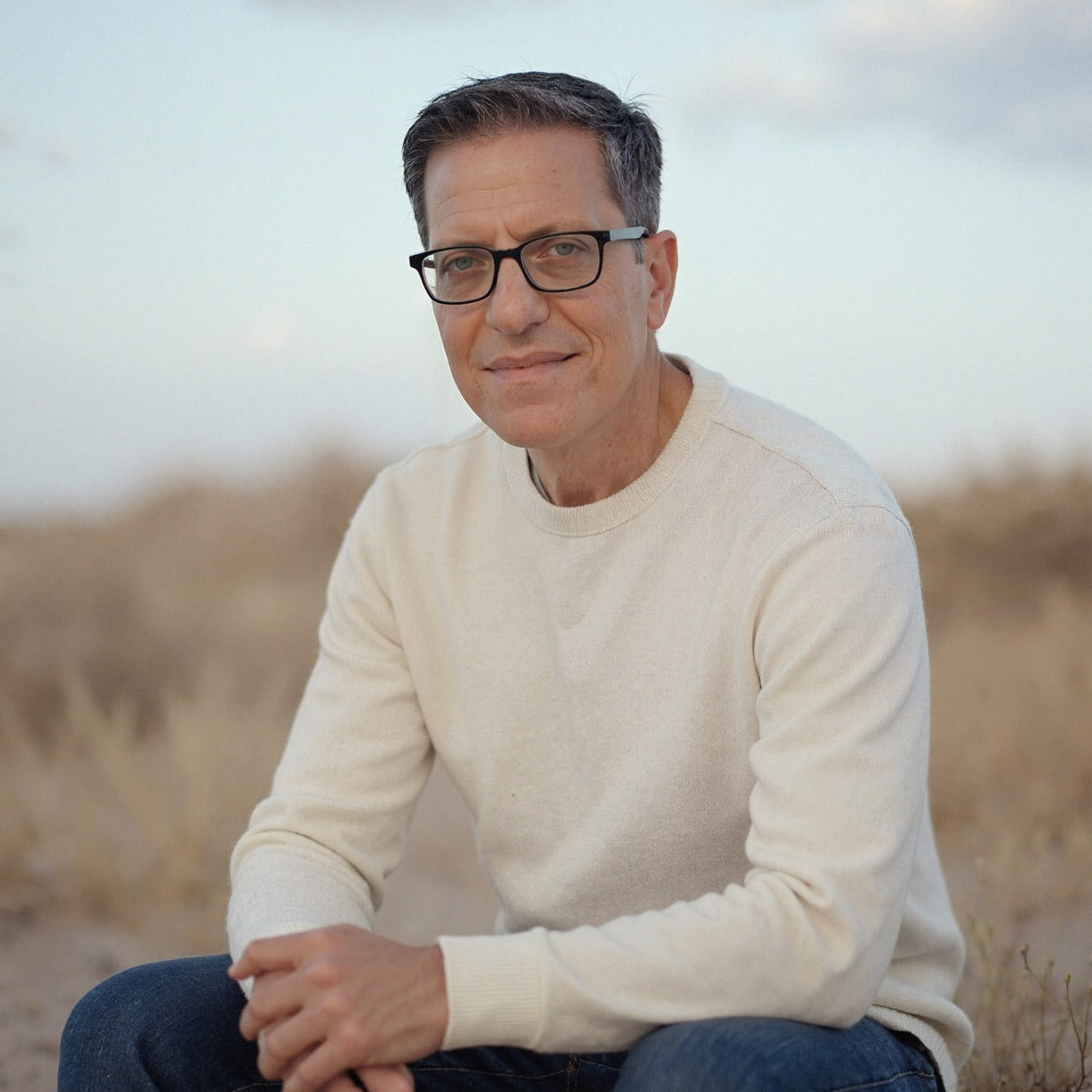
Jonathan Carp, MD
A board-certified physician who started Miracle Noodle in 2006 for his own patients. He doesn’t want to sell you something — he wants to help you become your own authority in your health.