
Learn / Gut & Fiber
Gut & FiberMeet glucomannan
 Jonathan Carp, MD·July 2026·~1 min read
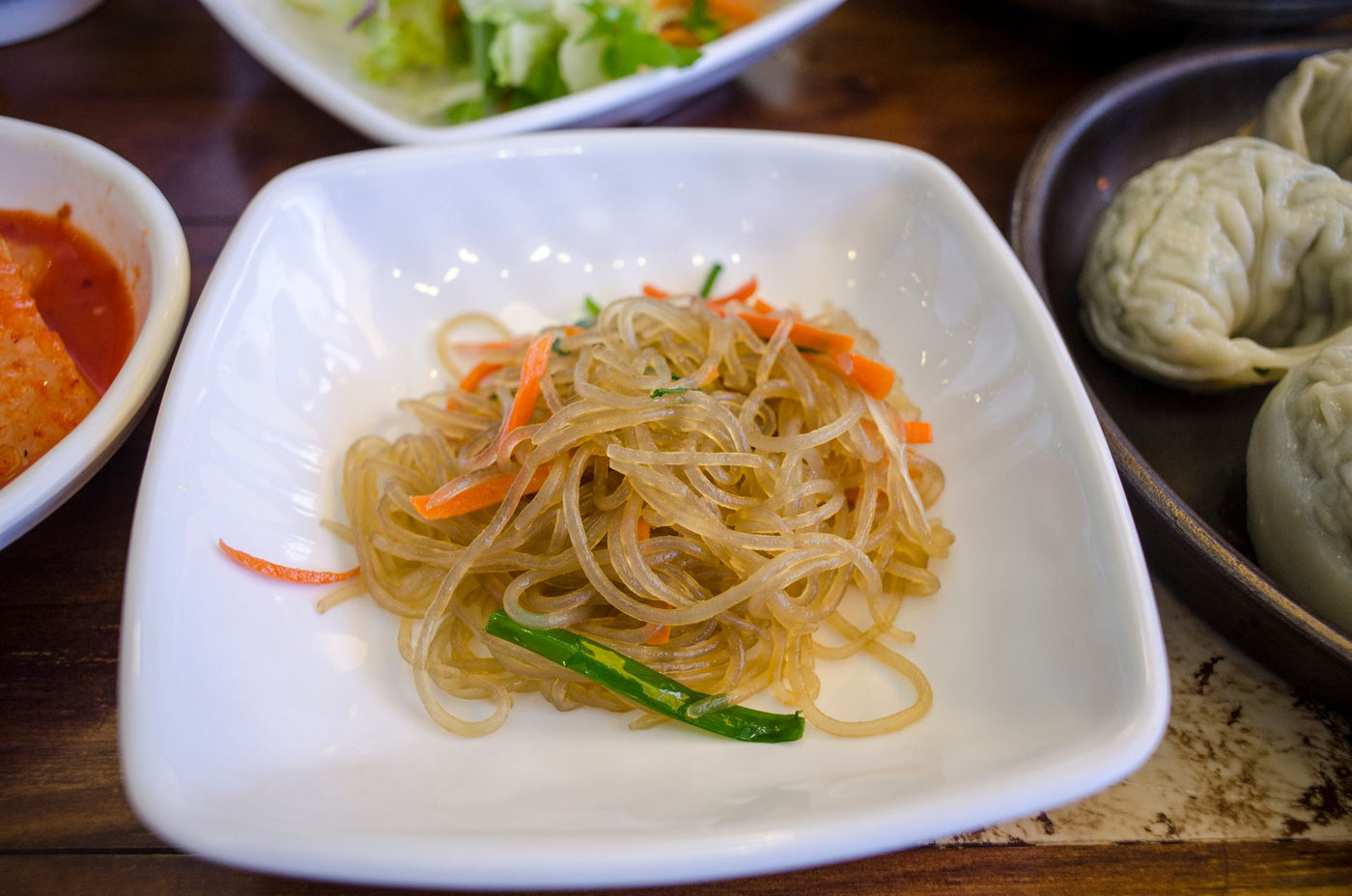
The fiber inside every konjac noodle, and why it earns its keep.
One fiber, doing a lot
The soluble fiber inside konjac has a name worth knowing, and it is glucomannan. It matters because it is one of the most-studied soluble fibers there is, so when we talk about what konjac does in your body, we are standing on a lot of quiet, patient research rather than a hunch.
What makes glucomannan special is how much water it holds, because it forms a soft gel that takes up room and slows things down. That gel is why a konjac bowl can feel filling and why it meters out digestion gently, so your blood sugar tends to stay steadier than it would with a fast-digesting starch.
It also does a second job you do not feel directly, because glucomannan is a prebiotic, which means it is food for the natural bacteria in your gut. When those bacteria are well-fed and happy, everything downstream tends to run smoother, and that is the reason why this one fiber earns its place in every noodle.
Miracle Rice
The same glucomannan fiber, shaped into a light grain that soaks up sauces and stir-fries.

Jonathan Carp, MD
A board-certified physician who started Miracle Noodle in 2006 for his own patients. He doesn’t want to sell you something — he wants to help you become your own authority in your health.